

European Retail Media in 2026: Five Considerations for a Market Entering Its Next Phase
In September, we looked inside the network: what breaks when a retail media business scales faster than its operations. This time, we’re looking outward at the market those networks are growing into.
Yes, the European retail media market is growing, but let’s talk about exactly how much. EMARKETER expects it to be worth more than €20 billion this year, with a 20.4% compound annual growth rate between 2024 and 2028.
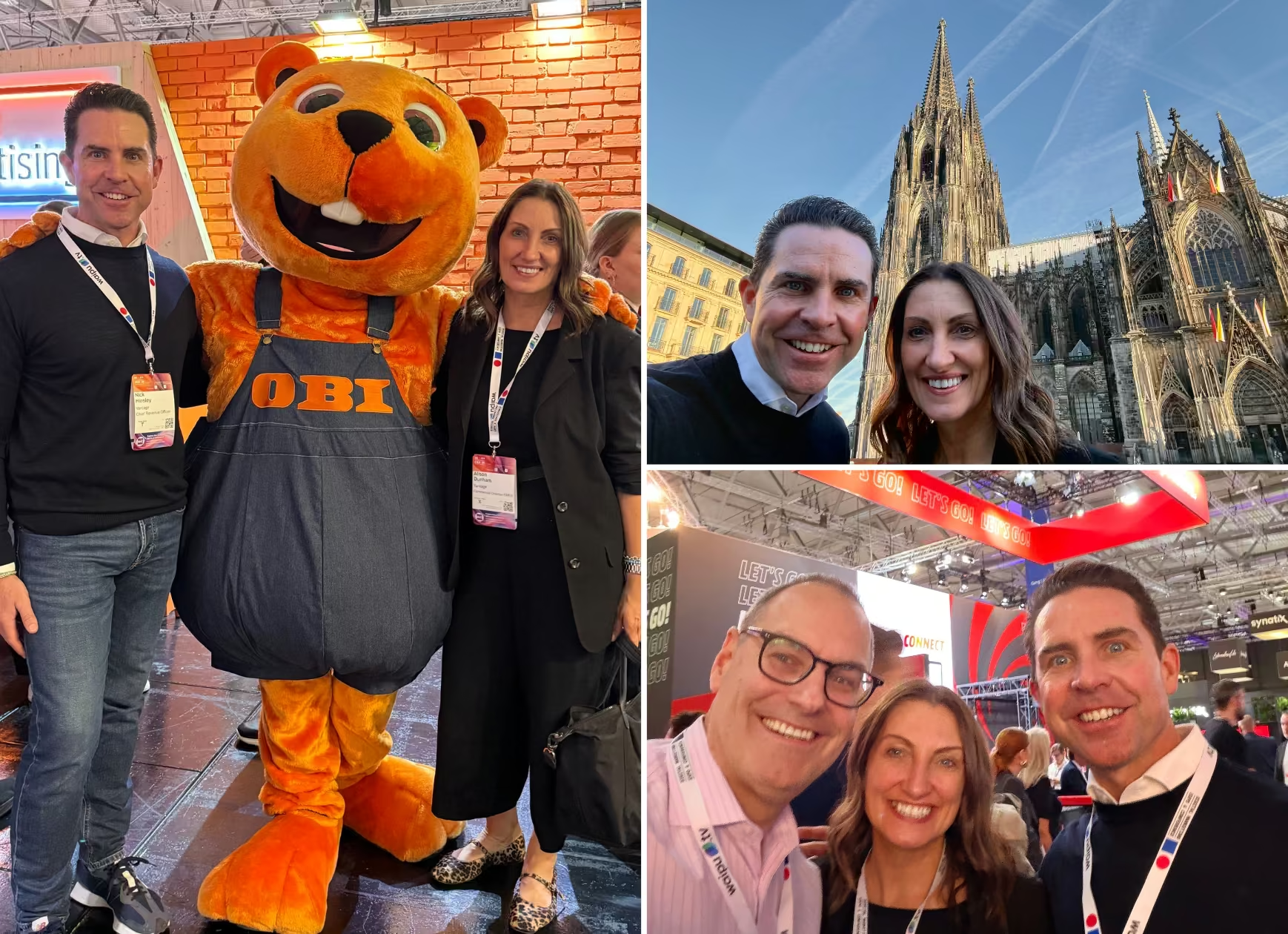
Over the past few weeks, events across Europe—including DMEXCO in Cologne, Retail Media Pioneers in London, and IAB Europe’s Beyond the Boom session in Amsterdam—made one thing clear: the conversation is moving beyond growth. Retailers, brands, and vendors want to know what's working, what's worth investing in, and who's responsible for making it all work. From measurement and AI to in-store media, the questions are getting more practical. And the answers matter more than ever.
Is ROAS the wrong metric for retail media?
Return on ad spend (ROAS) measures attributed efficiency. It says very little about incrementality, brand impact, or the wider contribution media makes to growth.
At an industry lunch, one speaker said “ROAS is a fraud.” We’d put it more precisely: ROAS is a useful number that is being asked to do too many jobs. Retail media is moving from a mostly lower-funnel, conversion-led channel to a full-funnel one. Once a network is expected to build brands and reach shoppers earlier in their journey, a return-on-ad-spend figure can’t be the primary measure of success.
ROAS still earns its place as one metric among several. Sales velocity, which shows how quickly a product sells through, and share shift, which shows whether a brand is winning shoppers from competitors, capture what ROAS can’t. Incremental sales ties them together by showing what the media actually caused.
The retail media measurement conversation has moved on to whether the numbers can be compared across networks. Roughly 7 in 10 advertisers use ROAS to measure retail media success, yet retailers calculate it differently, with different attribution windows and different assumptions about offline sales. The metric has the same name everywhere, and yet the maths changes from network to network.
Brands are asking for consistency, transparency, and proof of incremental value. The question underneath is a simple one: “What did this investment actually create?”
Is retail media a serious business for retailers now?
Yes. At DMEXCO, retail media networks (RMNs) had their own dedicated stands, some staffed by up to 30 people, alongside far more stage content than in previous years. Retailers are competing for agency and brand budgets, building partnerships, and establishing themselves in the wider advertising ecosystem. Monetising spare inventory is no longer the only goal.
The IAB Europe conversation pointed to where that ambition is heading: non-endemic advertisers, which let retailers monetise their audiences beyond traditional brand partners. Offsite retail media is one of the clearest openings for competition outside Amazon, and growth is concentrating among scaled players while the long tail falls further behind. That raises the stakes on running a network well.
Has AI moved from hype to value in retail media?
It has. The question in every session has shifted from “what can it do?” to “what is it worth commercially?” The consistent answer was that strong data foundations and real business outcomes matter more than the headline.
EMARKETER expects AI’s biggest impact in retail media to be operational: cross-network planning, unified reporting, and less manual work across fragmented ecosystems. That is a useful test for any AI claim you hear this year. Ask which workflow it removes work from.
Why does European retail media feel like a maze?
Because the market has grown faster than its vocabulary. The industry still lacks a standardised definition of retail media, and doesn’t always stick to one when it has it. Our working definition: advertising sold against a retailer’s first-party shopper data, regardless of channel, and measured against commercial outcomes such as incremental sales, sales velocity, and share shift.
Meanwhile, DSPs, SSPs, data providers, measurement partners, agencies, and retailers all filled the halls at DMEXCO, and keeping track of who does what is a job in itself. 58% of retail media advertisers invest with five or more networks. Europe adds its own layer, because every market and retailer sits at a different stage of maturity. EMARKETER calls fragmentation the defining challenge in the region and says no single network or buying strategy delivers complete coverage across it.
A Dragons’ Den-style vendor session at one of the events was a good response to this. Vendors explained what they do, the problem they solve, and where they add value, without the day turning into a sales pitch.
What’s next for retail media in Europe?
European retail media is moving towards connecting stores with onsite and offsite media, though markets are starting from very different places. In-store isn’t new to Europe, and how far along each retailer is depends heavily on the market. Full-funnel, online-to-offline, in-store media, and digital out-of-home advertising (DOOH) were all on the agenda across these events, and in-store retail media was one of the hottest topics. The IAB Europe session, however, was heavily focused on online.
The adoption data suggests the screens are already in place in many stores: digital in-store signage is the top in-store format for 70% of European RMNs, up from 44% in 2024. The open question is whether measurement and activation have kept pace.
What this means for retailers building in Europe
The next phase is about connecting the ecosystem and proving value, across digital and physical retail. With markets at different stages, that takes technology flexible enough to meet each retailer where it is, and an operating system that brings planning, activation, and measurement together across channels.
That is the market we’ve been building toward in EMEA, and these conversations tell us the timing is right. Three questions to ask about your own position:
- Could an advertiser compare your campaign performance with another network’s, using the same definitions?
- Which of your markets or ad formats is furthest ahead, and what would it take to bring the rest up to that standard?
- Where do you already own media, such as in-store screens, that you can’t yet sell or measure?
Want to make sure your network is ready for what's ahead? Let's talk.
Ready to build retail media that scales?
Whether you’re growing, streamlining, or rethinking your stack, Vantage fits your retail media business. Talk to our team to learn more.
You may also like



Subscribe to Vantage Point Newsletter


